Sell your house fast in Seattle, WA
"Can I sell my house fast in Seattle with a tenant in it?" Yes. We look at the house and the lease, and when the house is a fit, we buy houses with tenants in place. Only 43.7% of Seattle homes are lived in by their owners, so a lease is part of many sales here.
It takes about a minute, there's no obligation, and your details are never sold.
or call Jason (425) 242-4673
- Real Estate Investor Since 2003
- Licensed Real Estate Broker
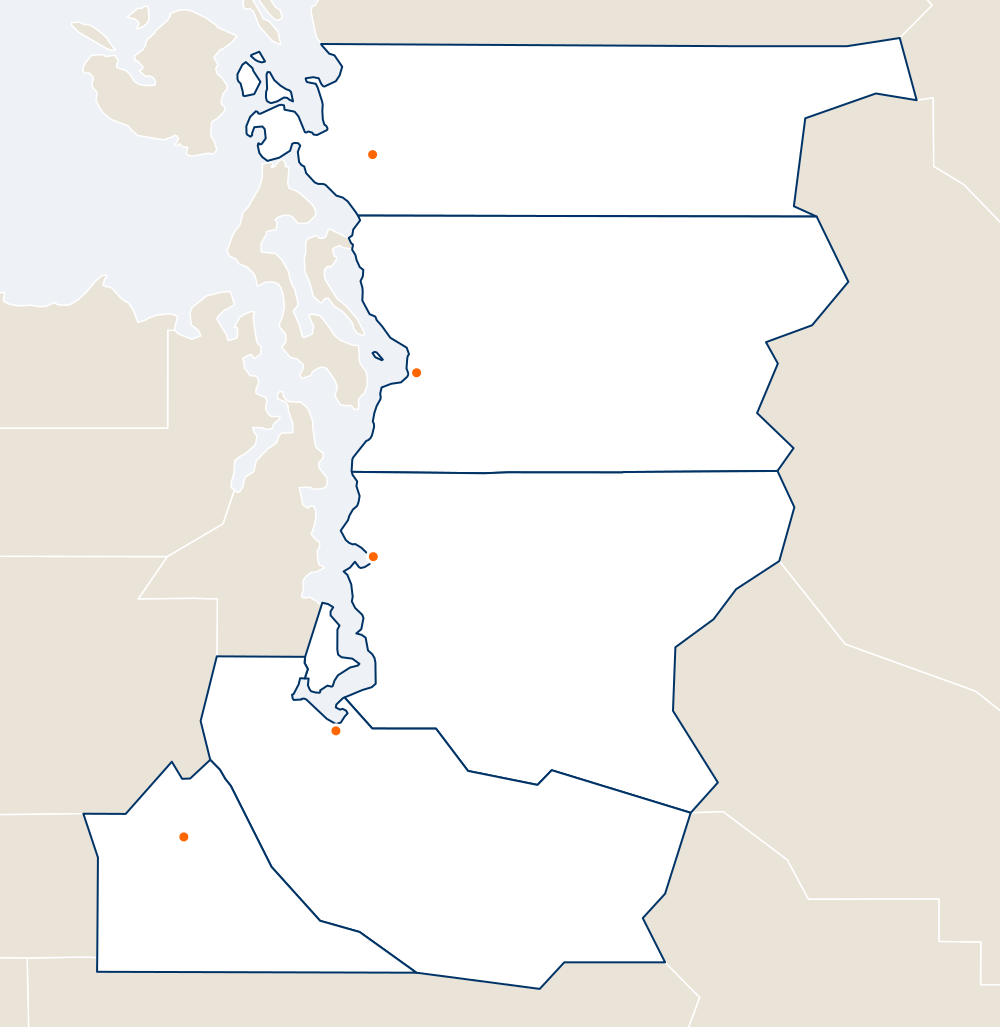
- Much of Washington, from Skagit to Thurston County and beyond
Last updated

Seattle by the numbers
Each figure below names its source and its month, from data refreshed on .
What selling a house in Seattle looks like right now
Seattle had 799 home sales in May 2026, and the median one went under contract after 11 days on the market, according to Redfin. Sale prices averaged 100.8% of the asking price that month. For a house that was clean, priced right and easy to finance, spring in Seattle was a quick sale.
Those houses had something in common: a buyer could get a loan on them and move in. The Seattle sales that drag are usually the ones where one of those two things breaks down. A lender's appraiser flags a sagging porch or a failed water heater, or a tenant's lease runs for another eight months and the buyer needs somewhere to live now. The citywide median doesn't show that split, and it's the part that decides how your own sale goes.
Values have eased a little. Zillow's typical home value for Seattle stood at $833,192 in August 2026, down 1.6% over the previous twelve months. The Census Bureau measures something else: what owners say their own house is worth, which came to a median of $938,600 across its 2020 to 2024 survey. One figure models recent market prices and the other is a five-year average of owner estimates, so the page keeps them apart.
Can you sell a Seattle house quickly when a tenant lives there? Yes, and in this city it's one of the most common ways a house changes hands. With only 43.7% of Seattle homes lived in by their owners, a lot of the single-family houses that go up for sale are rentals. A buyer who keeps the tenant becomes the new landlord on the same lease, which means nobody has to give notice and the rent keeps coming in through closing. If you'd rather sell the house empty, Washington and Seattle both require at least 90 days' written notice to end a tenancy so the owner can sell a single-family home, and that notice has to be given properly or it can be challenged. A cash buyer who plans around the lease can close without waiting out the notice period, and the trade-off is a lower price than an empty, staged house might bring on the open market.
Seattle is also far more rented than the county around it. Across King County, 55.4% of homes are owner-occupied, while the city's share is well under half. That gap shows up in who calls about selling: landlords with one house they've rented for years, adult children who inherited a parent's house that now has a tenant in it, and owners who moved out and kept the place as a rental.
Zillow counted 2,771 Seattle homes listed for sale in August 2026, and its median days to pending that month was 17. That's slower than the spring pace Redfin recorded, which is normal for late summer. Fewer buyers are out shopping, and a house that needs work feels the slowdown first.
For a landlord deciding whether to keep a house or sell it, the Census numbers frame the choice. The median gross rent in Seattle was $2,030 a month in the 2020 to 2024 survey, against a median household income of $123,860. A single-family rental that's paid off can carry itself on rent like that, while one with a newer mortgage, a roof coming due and a tenant on a below-market lease often can't, and that's the point where many owners start comparing a sale with another year of repairs.

Which situations come up most in Seattle?
Seattle sellers most often call about a rental with a tenant still living there, an inherited house going through King County probate, back property tax, and older houses on hillside lots where the city's steep-slope rules affect any repair. 52.8% of Seattle's housing was built before 1980.
How to sell my house fast in Seattle when the house is rented
Start with the lease. A month-to-month tenant and a tenant halfway through a one-year term need different plans, and in both cases the sale itself doesn't end the tenancy. Washington lets a landlord end a tenancy only for the causes the statute lists, and selling a single-family house is one of them: the owner gives at least 90 days' written notice and must actually intend to sell (RCW 59.18.650).
Seattle layers its own rules on top. The city's Just Cause Eviction Ordinance also requires 90 days' notice when an owner sells a single-family home, and the city counts only a detached house for that cause. A duplex, a condo or a unit in a small apartment building can't be emptied for a sale under it, so a landlord selling one of those usually sells it with the tenant in place.
Owners of a Seattle building with two or more units, where at least one unit rents at a level the city treats as affordable, may also owe the Office of Housing a notice of intent to sell before listing. The city's page sets out who has to file and when. Ask about it before you sign a listing agreement or accept an offer on a multi-unit property.
Showings are the other friction point. A tenant has a right to notice before anyone comes in, and an occupied house is harder to photograph and show on a tight schedule. Selling to one buyer who sees the house once, with the tenant's agreement on the time, keeps that disruption to a single visit and keeps the relationship with the tenant workable until closing.
Houses on steep slopes or landslide-prone ground
Seattle maps landslide-prone areas and steep slopes as Environmentally Critical Areas, and the city requires geotechnical review for work on those parcels. The map covers stretches of hillside across the city, including bluffs above Puget Sound and slopes above Lake Washington. If your house sits on one, a buyer's lender, inspector or contractor will want to know about it, and a repair that touches the ground, like a retaining wall or a drainage fix, goes through a slower permit path.
An inherited Seattle house
When the owner of a Seattle house dies, a probate case opened in King County goes to the Superior Court's Ex Parte and Probate department, which hears matters at the King County Courthouse on Third Avenue downtown and at the Maleng Regional Justice Center in Kent. The court appoints a personal representative, and with nonintervention powers that person can usually sell the house without a court hearing on the price (RCW 11.68.090).
A sale by a personal representative is exempt from the seller disclosure statement that most Washington sellers have to fill out (RCW 64.06.010). That matters when nobody in the family lived in the house for years and can't say when the roof was replaced. Estate houses in Seattle are often the older ones, still full of furniture, and sometimes rented, so the family may be handling a lease and a probate case at once.
Sometimes a relative is still living in the house when the estate wants to sell. That person may be a co-heir, a caregiver who moved in during the last years, or a family member paying no rent at all. Sort out who has a legal right to stay before you set a closing date, because the answer shapes the timeline, and an estate attorney can tell you which rules apply to that person.
Back property taxes and other liens
Once property tax on a Washington house has gone unpaid for three years, the county can issue a certificate of delinquency and start a tax foreclosure (RCW 84.64.050). King County's treasury holds one auction a year and lets an owner redeem up to the day before it. The county card on this page shows the next auction date once the treasury posts it and while it's still ahead. A sale before then pays the back tax, interest and any recorded liens out of the proceeds at closing. The title report shows what else is recorded against the house, such as a contractor's lien from an unpaid job or a court judgment, and each one is paid or released through escrow before the deed changes hands.
Older houses that need more than paint
Seattle's median home was built in 1976, and 52.8% of the city's homes predate 1980. Inspectors on those houses tend to write up the same handful of things: an unreinforced basement wall, a sewer line under the parking strip, an old heating-oil tank, plaster ceilings with cracks, and wiring that's been extended by several owners. A house with a few of those can still sell, and an as-is sale lets the buyer price them in rather than asking you to fix each one.

King County specifics for Seattle sellers
Seattle is the King County seat, and the offices a seller deals with have locations downtown. Probate runs through the Superior Court's Ex Parte and Probate department, the King County Treasury handles delinquent property tax, and the Recorder's Office records the deed when the sale closes.
County offices you may deal with in King County
Probate
King County Superior Court, Ex Parte and Probate
King County Courthouse, 516 3rd Ave, Seattle, or the Maleng Regional Justice Center, 401 4th Ave N, Kent.
Property tax and tax sales
King County Treasury, tax foreclosures
King County's 2026 auction covered taxes from 2022 and earlier, and an owner could redeem up to the day before it (RCW 84.64.050 sets the three-year trigger).
The next sale date isn't posted yet. The treasurer's page lists it once it is.
King County probate can be handled at either courthouse, so a family in Kent or Auburn settling a parent's Seattle house doesn't have to come downtown for every filing. Many personal representatives work through an attorney and never appear in person. The case number is what the title company asks for, together with the letters the court issued, so keep both with the sale paperwork.
At closing, the title or escrow company files the real estate excise tax affidavit, collects the state and city excise tax from the seller's proceeds, and sends the deed to the King County Recorder's Office. You don't visit any of those offices yourself. What you'll see is a settlement statement that lists each payoff, tax and fee before you sign.
If the tax bill has slipped, the treasury's tax foreclosure page lists the years now subject to the next auction, and an owner who pays everything owed before the deadline keeps the house off the list. The King County page covers the rest of the county, from Shoreline and Bothell down to Kent and Federal Way.
Cash sale or listing in Seattle: a worked example
For example, take a house at Seattle's median sale price in May 2026, $901,000 according to Redfin. Washington's graduated excise tax on that price comes to about $10,588, the city's local excise tax at 0.5% adds about $4,505, and each 1% of commission you agree to costs $9,010.
| List it | Take a cash offer | |
|---|---|---|
| Price | $901,000 | Your written offer |
| State excise tax | $10,588 | The same graduated rate, on the offer |
| Local excise tax (0.5%) | $4,505 | 0.5% of the offer |
| Commission | $9,010 for each 1% you agree | No listing commission |
| Repairs, prep, months on the market | Your bids and your monthly costs | Priced into the offer |
At Seattle prices, small percentages turn into large sums, since every point of commission on a median house is $9,010. The listing column also has to carry what you'd spend to get the house ready and the months of mortgage, tax, insurance and utilities while it's on the market. Fill those in from real bids for your own house, then set the total beside a written cash offer.
Jason is a licensed broker as well as a buyer, so he can lay out both columns for your Seattle house: the cash offer when the house fits, and an estimate of what listing it would leave you when it's ready for the market. Jason Bryant is a licensed broker with Windermere Real Estate (license 101377).
A rented house adds one more line to the comparison. Listing it empty means giving notice, losing rent for the notice period and the time on the market, and then preparing a house a tenant has lived in. Selling it occupied keeps the rent coming and skips the turnover work, which is why landlords here often weigh the two side by side before deciding.

Selling a Seattle house in a mapped critical area
Hillsides shape a lot of Seattle's housing, from the slopes of Queen Anne and Magnolia to the bluffs along West Seattle and the hills above Lake Washington. Where the city has mapped a parcel as steep slope or landslide-prone, the designation stays with the land and comes up when it sells.
The city's critical areas code governs what can be built or regraded on those parcels, and its landslide-prone areas map shows where the designations fall. A buyer planning an addition, a new deck on posts or a backyard cottage will find that the permit needs a geotechnical report first. That adds cost and time to their plans, and some buyers price it in while others pass on the house.
What helps is paperwork. If you or a past owner ever had a soils engineer out, installed drainage, built a retaining wall with a permit or repaired slide damage, find the report and the permit card. Washington's disclosure statement (RCW 64.06.020) is where a seller tells a buyer what they know about the property, and a documented repair reads far better to a buyer than an unanswered question.
A mapped slope doesn't mean the ground has moved. Plenty of houses on those maps have stood for a century without trouble, and the designation describes the terrain. On a walkthrough of a hillside house, we look for the practical signs: cracks that step across a foundation, doors that stick on one side of the house, water running toward the footings, and leaning retaining walls.
Seattle's wet months are when drainage problems show. If water pools against the house in winter, a downspout empties onto the slope, or the basement takes on water after a long November storm, note when it happens and what you've done about it. A buyer who sees the house in a dry August won't know unless someone says so, and telling them early avoids a dispute later.

How a sale works with Jason in Seattle
The steps don't change from one city to the next. A Seattle sale with Ideal Home Sale begins with a call about the house and a walkthrough at a time that suits you and any tenant living there.
You call or send the address
Tell Jason a little about the house and what you need from the sale.
We schedule a walkthrough
One visit, in person, with no cleaning or repairs first.
You get your options in writing
A written cash offer when the house is a fit, and what a listing would likely leave you, side by side. Jason Bryant is a licensed broker with Windermere Real Estate (license 101377).
You choose
Take the offer, list, or do neither, with no obligation to pick any of them.
It closes at a title company
A licensed title or escrow company handles the money and the deed, on the date you agree.
For a rented house, the walkthrough is set up with the tenant's notice in mind, and the lease, deposit and rent records go to the title company so they transfer correctly at closing. If the house is empty and you live out of state, the closing papers can be signed with a mobile notary wherever you are, and the keys can be left with the title company or a lockbox. The deed is recorded with King County, and the how-it-works page walks through each step in more detail.

Illustration. 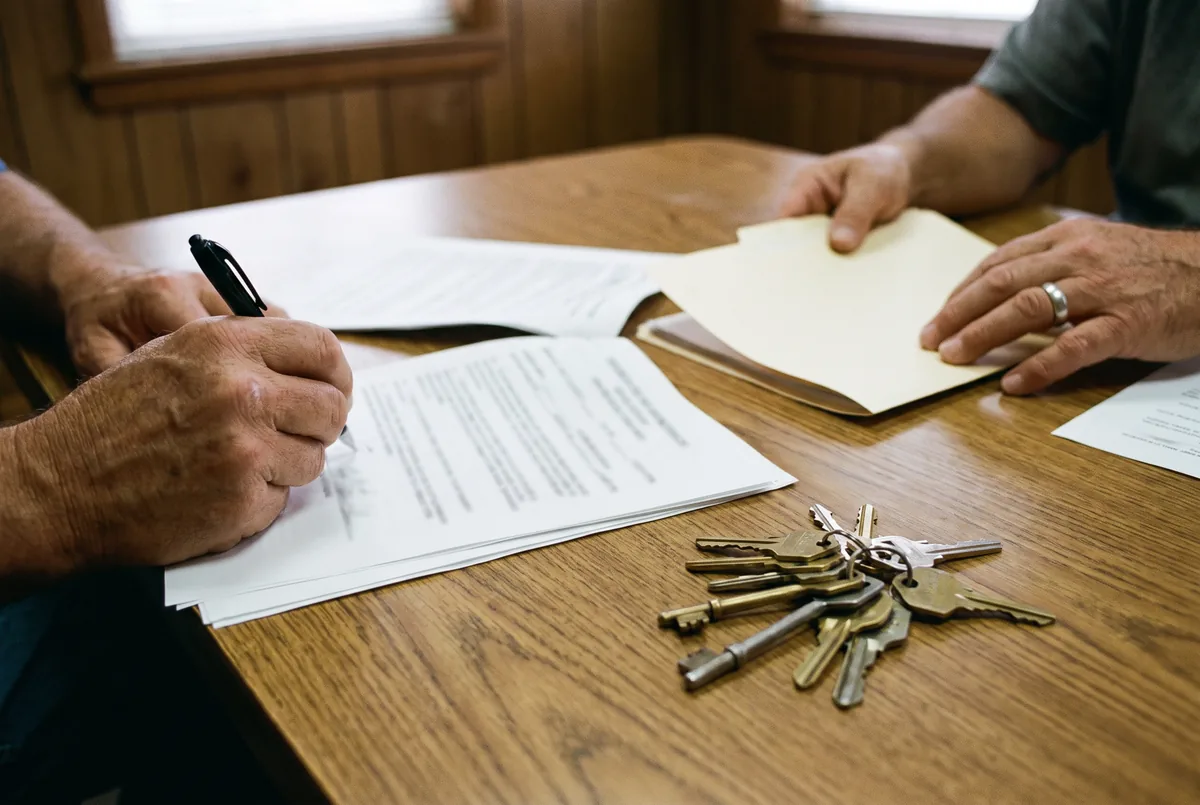
Illustration. 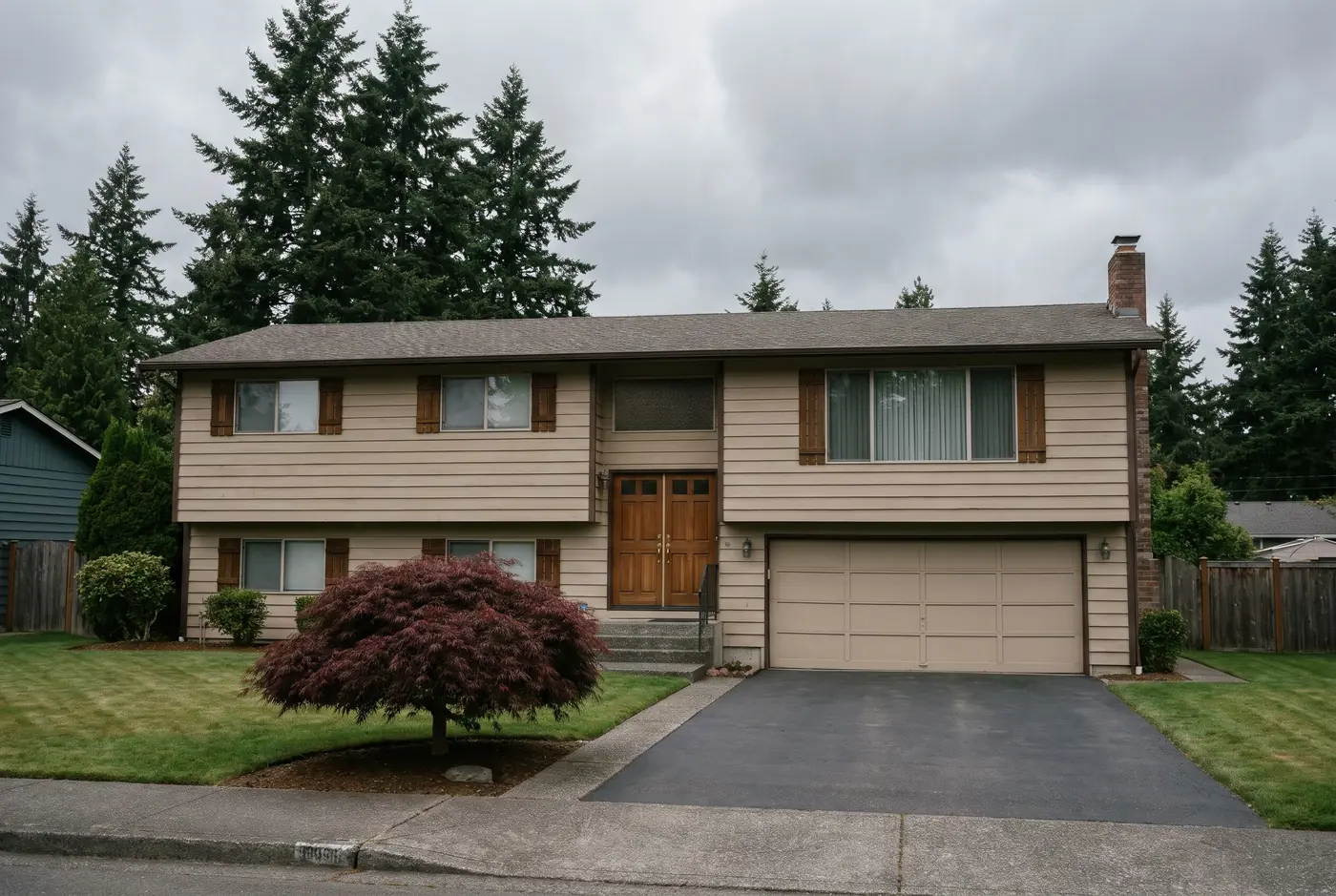
Illustration.


West Seattle, North Seattle and South Seattle houses
Seattle's housing changes from one part of the city to another, and so do the questions a buyer asks about it. Three broad areas cover most of the single-family houses that come up for sale outside the dense neighborhoods near downtown.
West Seattle sits across the Duwamish Waterway from downtown, and the West Seattle Bridge is the main way in and out. Much of its housing is older bungalows and mid-century homes on hilly streets, with view lots along the ridges and steep ground near the water. A slope designation or a long side sewer down a hill is a common item on a West Seattle inspection.
North Seattle, especially the neighborhoods north of the Ship Canal and up toward the city line at 145th Street, has long blocks of post-war houses and ramblers on flatter ground. Many still have original single-pane windows, older electrical panels and basements that were finished by an owner rather than a contractor. The houses tend to be simpler to inspect, and buyers focus on systems and updates.
South Seattle, including the Rainier Valley and Beacon Hill, mixes early-1900s houses with mid-century homes and newer townhouses built on lots that once held a single house. It's where a seller is as likely to own a modest older house with deferred repairs as a recently built unit, and the two sell to very different buyers.
Across all three, only 36.8% of the city's housing is single-family detached. The rest is apartments, condos, townhouses and small multi-unit buildings. Ideal Home Sale focuses on single-family houses, and the property types page explains how a duplex, a townhouse or a house with a backyard cottage is looked at.

What to pull together before you sell a Seattle house
A Seattle sale moves faster when the documents are already on the table. None of this is needed for the first walkthrough, and Jason can tell you which pieces matter for your house, but having them saves a week of hunting once there's a buyer.
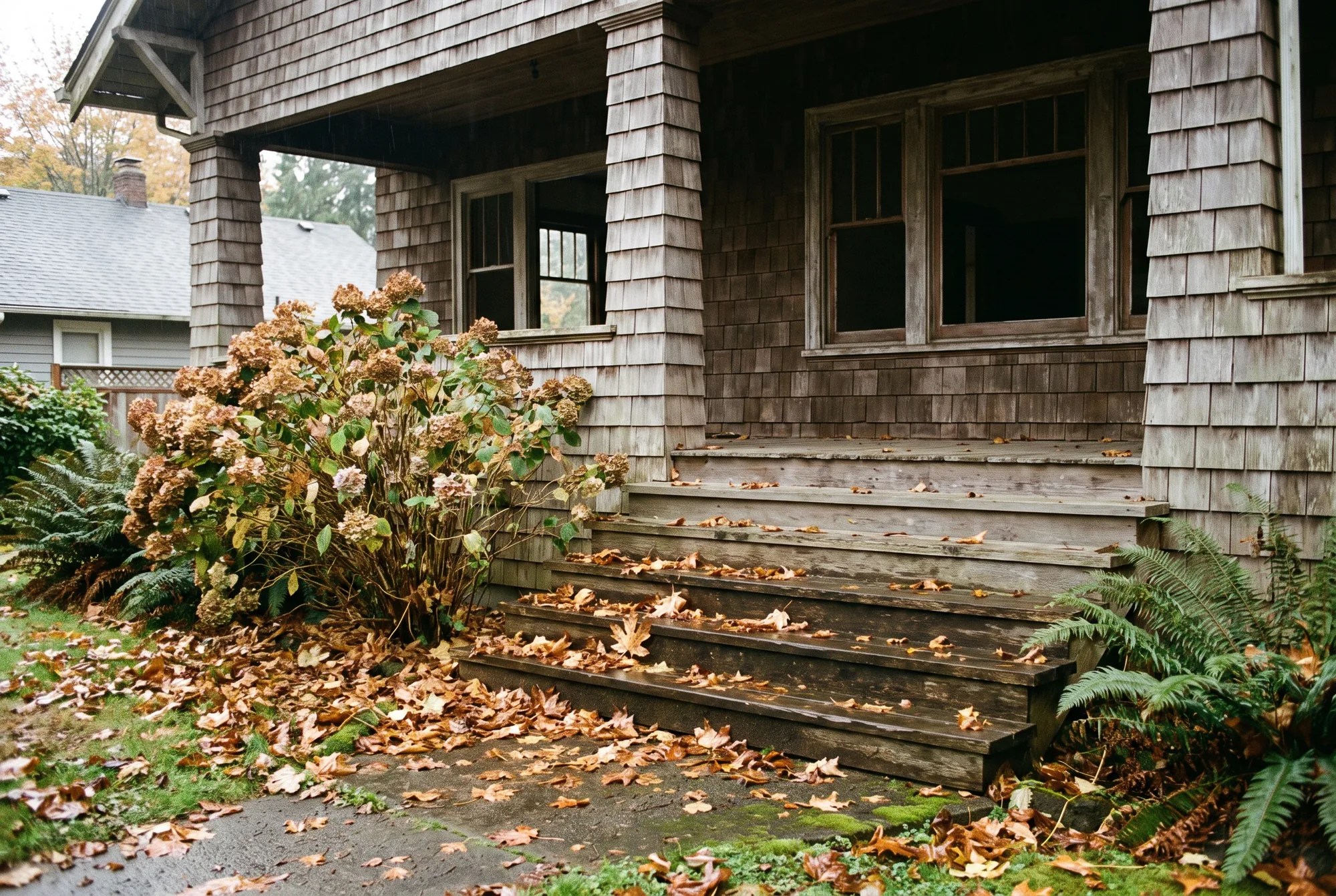
Illustration. 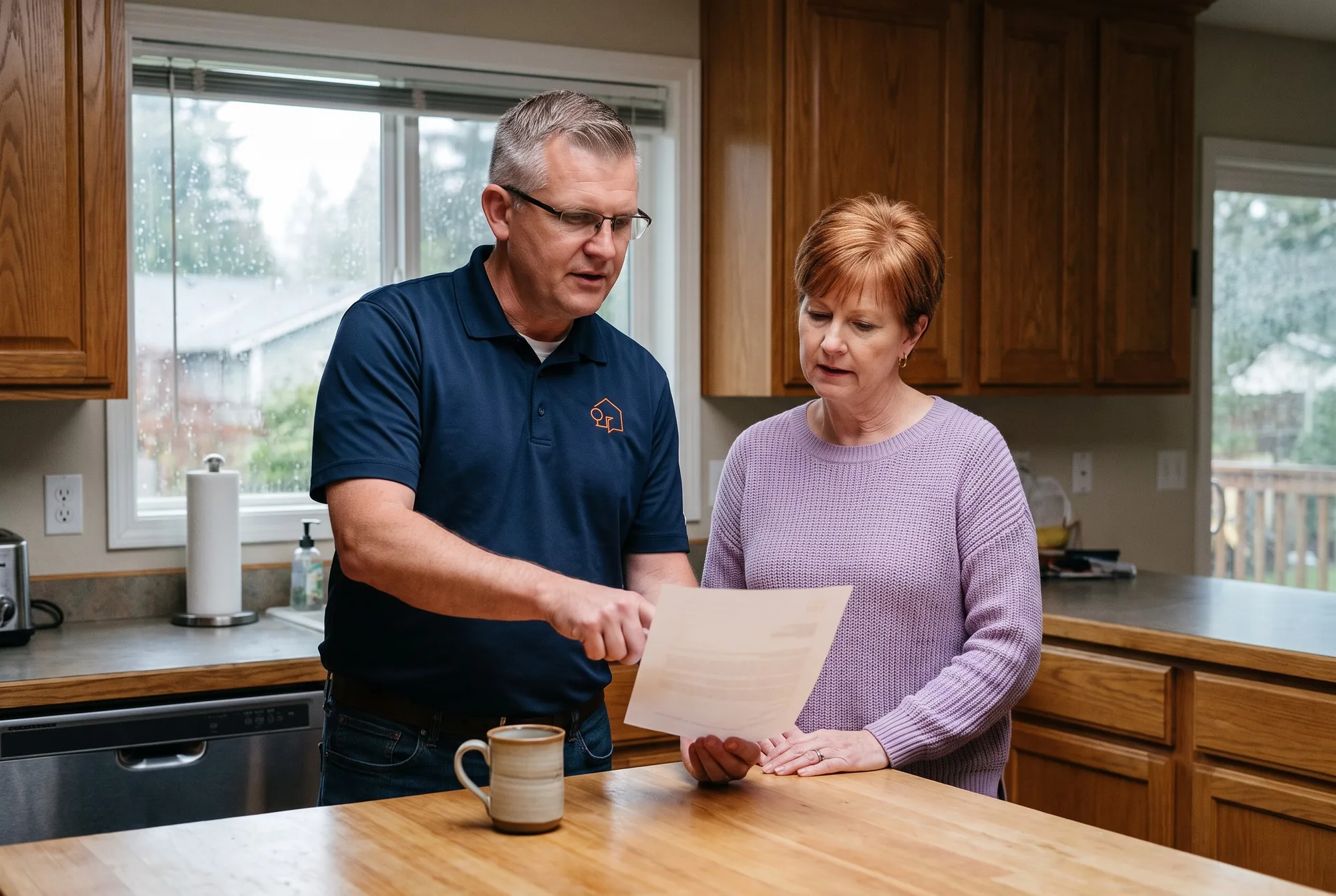
Illustration. 
Illustration. 
Illustration. 
Illustration. 
Illustration. 
Illustration. 
Illustration. 
Illustration.


What to have handy
- The current property tax statement from King County, and any delinquency notice the treasury has mailed.
- For a rental: the signed lease, any renewals, the deposit amount and where it's held, and copies of any notices you've given.
- Permit records for past work. Seattle's permit portal lists permits by address, which helps when a buyer asks about a finished basement or a new roof.
- Any side sewer inspection or repair receipts. Seattle property owners are responsible for the side sewer that runs from the house to the city main.
- Soils or geotechnical reports, drainage plans and retaining wall permits for a house on a mapped slope.
- For an estate: the letters testamentary or letters of administration, and the probate case number.
- The lender's payoff statement if there's a mortgage, plus any home equity line still open.
If a buyer's inspector has already been through the house during an earlier attempt to sell, keep that report too. It tells Jason what a buyer found last time, and it often explains why an earlier deal fell apart. The same goes for a pre-listing inspection you paid for and then shelved, a sewer scope video, or an oil tank decommissioning certificate from a past owner.
Questions sellers ask
Are Seattle home values going up or down?
Down slightly. Zillow put the typical Seattle home at $833,192 as of August 2026, a twelve-month change of down 1.6%. Houses in move-in condition still drew close to asking this spring.
How quickly do Seattle houses sell?
Redfin's May figures put the median at 11 days on market. By August 2026, Zillow's median days to pending had stretched to 17. A house that needs repairs or has a tenant usually takes longer than either number.
Can I sell my Seattle rental without asking the tenant to leave?
Yes. The buyer takes over as landlord under the existing lease and receives the deposit. That avoids the notice period entirely, and it suits a buyer who wants a rental or plans around the lease.
Do you buy Seattle houses that need major repairs?
When the house is a fit, Ideal Home Sale makes a cash offer on it as it stands, including houses with foundation, roof, sewer or electrical problems. You don't have to clear out or repair anything before the walkthrough.
Which court handles probate for a Seattle house?
King County Superior Court, through its Ex Parte and Probate department. Filings can be made at the courthouse at 516 Third Avenue in Seattle or at the Maleng Regional Justice Center in Kent.
When does King County hold its tax sale?
Once a year, run by the King County Treasury for property with three or more years of unpaid tax. The treasury's tax foreclosure page posts the date and the redemption terms, and the county card here lists the auction while it's upcoming.
Does a steep-slope designation stop a Seattle house from selling?
No. It means building or regrading work on the lot needs a geotechnical review, which some buyers factor into their price. Old soils reports or permits for drainage work help answer their questions.
Is Seattle a buyer's or seller's market?
It favored sellers of ready houses this spring: homes that sold in May 2026 went for 100.8% of list price on average (Redfin). The late-summer slowdown has given buyers more choice since.
Sources
- US Census Bureau, American Community Survey 2020-2024 5-year estimateschecked
- Zillow Research, Zillow Home Value Index (typical home value, mid tier)checked
- Zillow Research, median days to pending and for-sale inventorychecked
- Redfin Data Center, city market tracker (all residential, monthly)checked
- Washington Department of Revenue, real estate excise taxchecked
- Washington Department of Revenue, local REET rates effective January 1, 2026 (form 84-0013)checked
- RCW 59.18.650, notice to tenants when an owner sells a single-family homechecked
- City of Seattle, Renting in Seattle: Just Cause Eviction Ordinancechecked
- City of Seattle Office of Housing, Notice of Intent to Sell: information for landlordschecked
- Seattle Department of Construction and Inspections, Environmentally Critical Areas codechecked
- Seattle Department of Construction and Inspections, landslide-prone areas mapchecked
- RCW 11.68.090, sale of estate property under nonintervention powerschecked
- RCW 64.06.010, sales exempt from the seller disclosure statementchecked
- RCW 64.06.020, the seller disclosure statementchecked
- RCW 84.64.050, certificate of delinquency after three years of unpaid taxchecked
- Washington Courts directory, King County Superior Courtchecked
- King County Superior Court, ex parte and probate procedureschecked
- King County Treasury, tax foreclosureschecked

Tell us about your Seattle house
Send the address, and mention whether anyone is renting it. We'll call you back to talk it through and set up a walkthrough.
It takes about a minute, there's no obligation, and your details are never sold.
or call Jason (425) 242-4673